
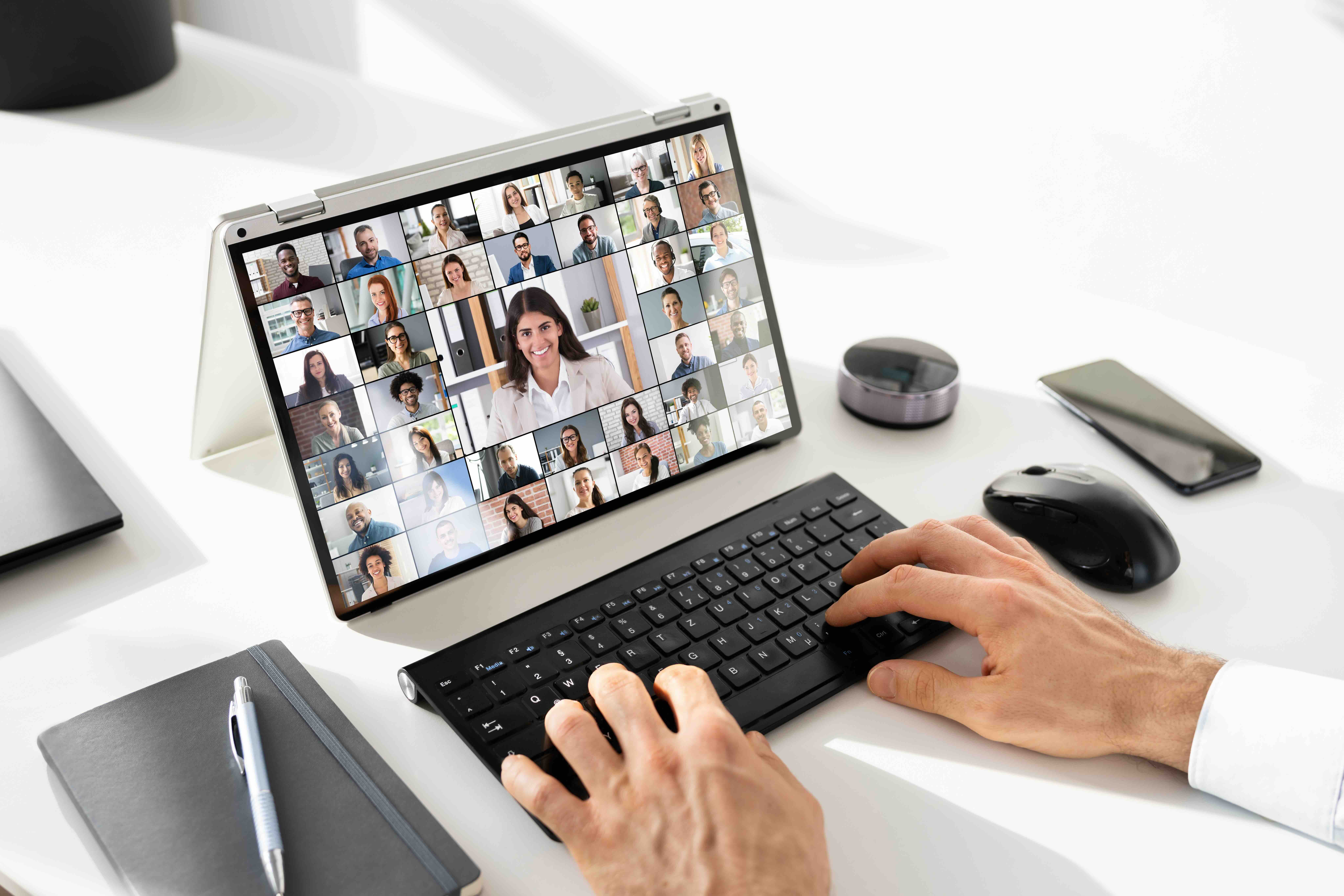
Open plan offices, including activity-based, agile offices, have a mixed reputation. There are many benefits. For example, the open plan office provides floorplan flexibility and collaboration, which is important to workers and employers alike. Agile offices are also cost effective. With an increasing number of employees working from home at least part of the time, the open plan activity-based space allows for hot desking which reduces overheads.
Diminished cost effectiveness
However, the cost effectiveness diminishes when workers are interrupted by colleagues’ conversations, intrusive noise, notifications, and other distractions. This can cost businesses thousands of dollars in productivity every week. For example, the average Australian worker loses 600 hours per annum to distractions. In dollar amounts, employers paying an average wage earner would waste $18,600 per annum for each employee. While workers who are constantly interrupted can work around the interruptions by changing their work patterns to complete the work faster, they experience more stress, higher frustration, more time pressure, and effort. In other words, this comes at a price that could be reflected in employee burnout or increased sick days.
Speech privacy problems
Speech privacy is another problem that faces business. Without speech privacy, the majority of open plan office workers experience dissatisfaction with their working environment. There are also legal obligations underpinning auditory privacy within the open plan space – for example, where workers may collect or disclose sensitive information covered by health records or privacy legislation, or where lawyers have obligations of client confidentiality.
It can be daunting to balance these acoustic needs with cost and end user experience front of mind. This is especially true now office designs are seeking to be flexible, adaptable, and resilient.
Agile solutions
Innovative solutions to these acoustic problems have become necessary. Take for example, a recent agile office installation, where the workspace included:
internal moveable walls that team members can move themselves to expand or contract the amount of space their team needs, making the labs fully hackable. Some labs are fully enclosed with solid sliding partitions that separate what happens in them from adjacent open work areas, while others afford visibility to the inner workings and artefacts of a project team. Flexibility is made possible by overhead rigging that supports the movable walls, lighting and power and data receptacles that hang within reach of users, allowing them to make adjustments and mould spaces as they require.1
Acoustic flexibility
The necessity to solve the acoustic issues with similar flexibility becomes obvious. While some can be solved with sound absorption, this alone will not eliminate distracting noise or optimise speech privacy in the open plan office whether it is a standard layout or an activity-based working environment. Further, absorptive materials often do not serve to reduce the business’s carbon footprint. In contrast, sound masking ensures that distracting noise is masked, provides speech privacy, and reduces the carbon footprint of the space.
The solution
Thankfully, sound masking has been proven to have the flexibility, scalability, effectiveness and cost efficiency to solve these problems. To learn how, why not contact us?
This blog is an edited excerpt from The flexibility of sound masking: three case studies from Perth presented at Acoustics 2025. To read the full paper, please click here.
- Candido, Christhina, Iva Durakovic, and Samin Marzban (eds). 2024. Routledge Handbook of High-Performance Workplaces, 1st edition. ↩︎