
Part 5 of our series based on our paper “User Comfort in Unexpected Acoustic Environments”.
Melbourne has numerous large-scale building works, including rail, road and tunnelling projects. Some have run for years, and many involve 24-hour and night works. They’re temporary, but they have a real impact on residents.
First discovery: Level Crossing Removal works
We first saw the effect of sound masking on night works at a residence a little under 400 metres from the Level Crossing Removal works, with dense housing in between. Masking was set around 30dBA, compared with a usual night-time background of 23dBA.
For loud, intermittent, low-frequency sounds, we would normally specify a sound masking system with a sub-woofer and specific bands. Here, we wanted to work with what we had and see what happened.
Over two weeks of 24-hour works, including pile driving and saw cutting, we used a sound specially shaped for road noise. Residents without sound masking slept badly. Those with it slept as usual. These findings were anecdotal but suggestive: the sub-woofer and low-frequency bands might not be necessary.
A more controlled test: North East Link
From 27–29 March 2026, North East Link works took place within 175 metres of another residence. We measured the system’s performance more carefully.
The works included intermittent bangs and crashes from concrete work, piling, underground cabling, saw cutting and asphalt removal. Because of the nearby Eastern Freeway, the home usually has ambient sound of around 41–43dBA. That evenness means minimal sleep disturbance normally. During the works, levels ranged from 40–60dBA, with an average of around 42–43dBA. It was the peaks that were disruptive.
- Night 1 (no masking): the intermittent sound was disturbing and sleep was difficult.
- Night 2, first half (masking at 42–43dBA): all works sound was masked, but the masking itself was too loud and sleep was disturbed. This was expected, as recommended background levels for sleep are around 30–35dBA.
- Night 2, second half (masking at 30dBA): some construction sound was still audible, but it was no longer distracting or disturbing to sleep.
Caveats
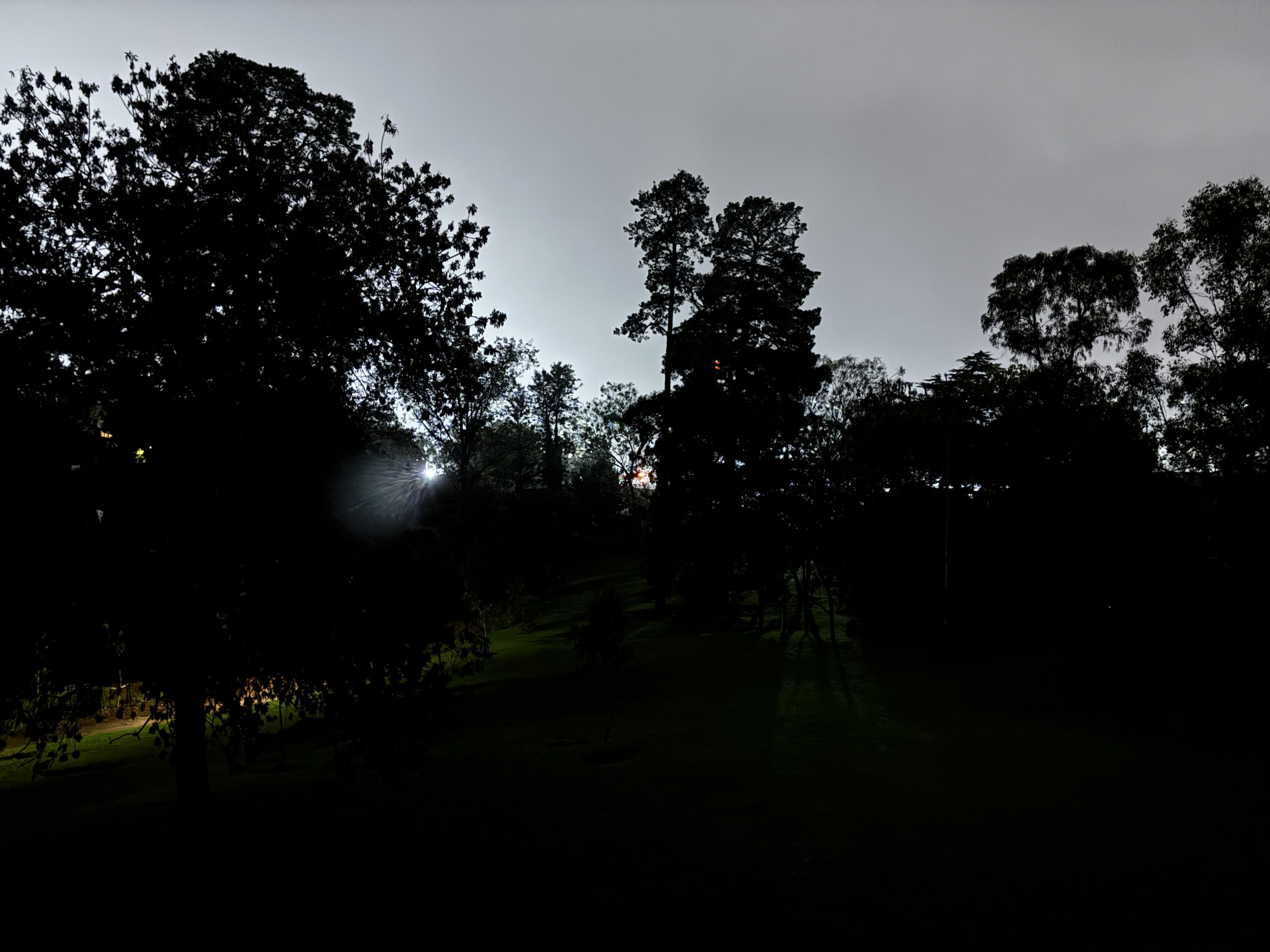
At 175 metres, the residence was not as close as some works, and trees and parkland in between may have absorbed some sound. There was no double glazing, but blackout blinds helped with the extreme light pollution from the works.
Takeaway
More masking isn’t better. At 30dBA, quieter than the works themselves, the system did more for sleep than one loud enough to cover everything.