
Part 4 of our series based on our paper “User Comfort in Unexpected Acoustic Environments”.
Road traffic noise is stressful enough. It gets worse when it stops people doing their jobs.
The site
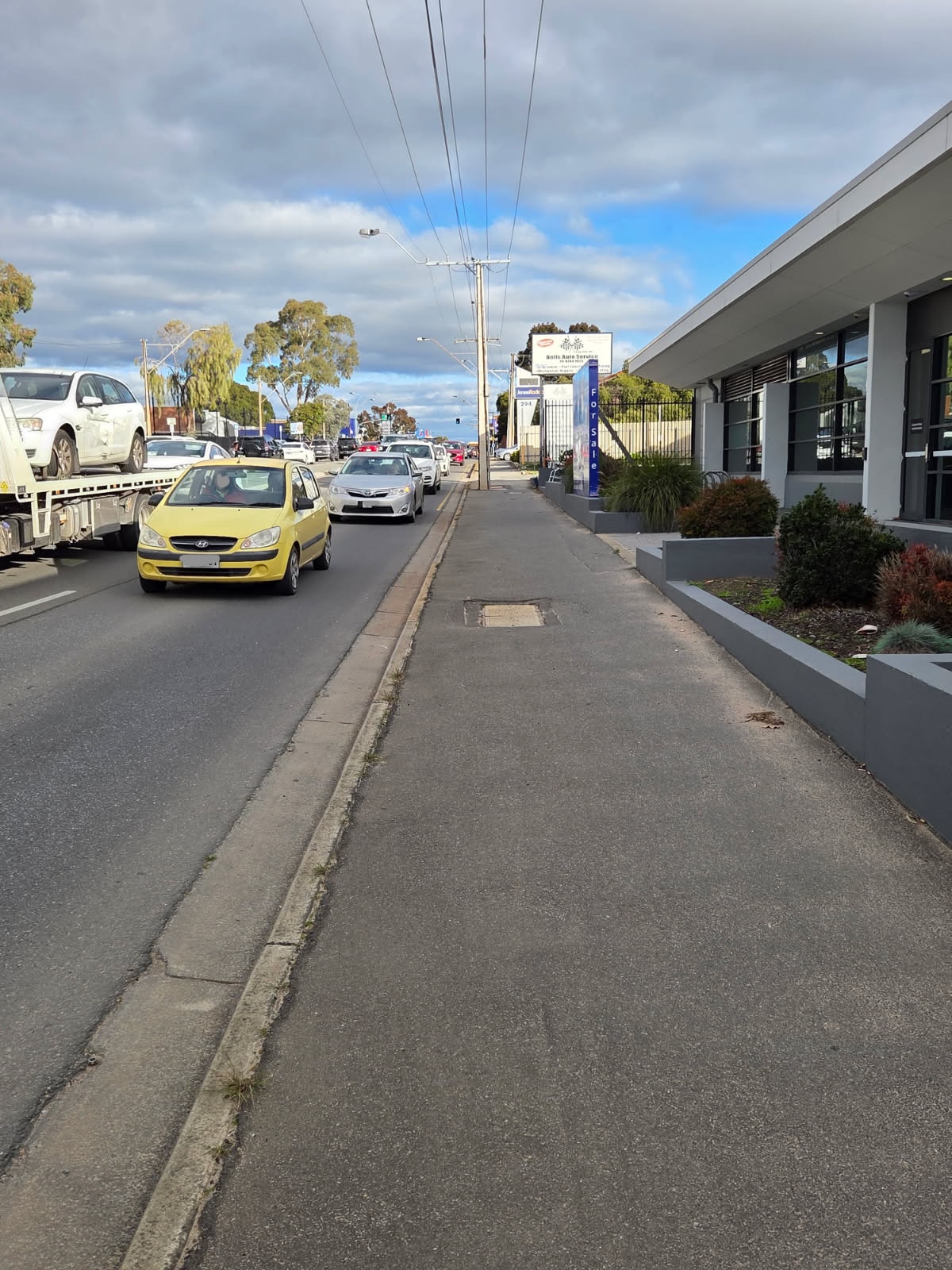
A Centrelink service office in Adelaide faced a main arterial road with very high traffic volumes, including heavy haulage trucks. The building was less than 30 metres from the road, with no trees, bushes or barriers. There were traffic lights 50 metres away on a slight hill, so noise rose when the lights changed and semi-trailers slowed and accelerated.
The agency had already installed two sets of automatic doors with an air lock. It helped, but only when the doors were closed, and in a customer-facing office they’re constantly opening. The service counter sat eight metres inside the entrance, in line with the doors. When they opened, staff and clients couldn’t hear each other.
The measurements
We measured sound over a full working day. Levels ranged from 55dBA to 85dBA, with peaks over 95dBA. They were highest in the morning and afternoon peak hours and between 12pm and 2pm. That is well above the WHO guideline of 45–55dBA.
Why sound masking?
Sound masking isn’t normally used at these levels. But sound absorption screens and other physical options were unsuitable because of the need for disability access, so the client was willing to try.
The approach
We installed transducers directly above and in front of the counter and in adjacent areas, in separate zones for easy adjustment. The aim wasn’t to add to the noise but to raise the background slightly, evening out the sound and reducing the difference between high and low traffic noise. Staff would then become accustomed to more constant levels.
We set initial levels at 47dBA (after hours) to get a clear reading, and raised them slightly during implementation. Over the following weeks we made small, gradual adjustments when staff weren’t present, so the changes didn’t draw attention.
The result
As with all sound masking, there was an acclimatisation period. After several weeks, the feedback was positive and the system improved the issues.