
Heritage buildings tell incredible visual stories. They often feature soaring, vaulted ceilings and expansive, hard-surface floors. These beautiful spaces connect us directly to our history. Yet, they can present unique challenges for modern acoustic comfort. Large open rooms create extensive reverberation. Speech privacy is compromised, or non-existent. Usually, soft furnishings and sound dampening panels may help, especially with reverberation. However, heritage listed buildings often ban visual or physical alterations. Property managers face a tough puzzle: how do you introduce modern sound management without satisfying the heritage requirements, and preserving the building?
The challenge of heritage listed spaces
Standard office layouts benefit from drop ceilings, dense carpet tiles, and modular partitions. These elements absorb sound close to its source. Conversely, heritage offices offer none of these luxuries. To solve this, designers must balance the needs of the heritage space and the occupants. This method must preserve the original building fabric, and has successfully been implemented using sound masking.
Soundmask’s systems are visually and acoustically non-intrusive, and can be used to mask intrusive noises safely. Soundmask’s systems emit a gentle, engineered background sound similar to airflow. This masks human speech and reduces the radius of distraction effectively. Staff members can then focus on their work. Most importantly, clients regain complete confidentiality.
Case Study: Sydney Opera House Box Office
Even globally famous spaces struggle with internal reflections. The Sydney Opera House Box Office features an open-plan design with low partitions. The bustling call centre suffered from compromised speech privacy. Furthermore, distracting ambient noise plagued daily operations. Because the premises sit inside a listed heritage building, any modifications had to follow strict rules.
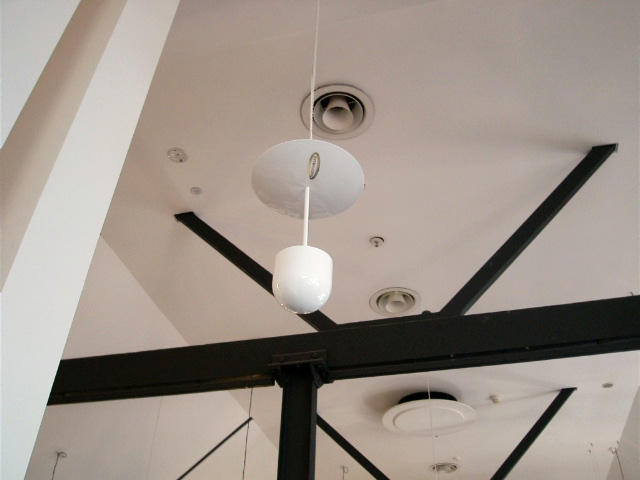
The unique, vaulted sawtooth ceiling structure (pictured above) prevented normal speaker installation. Technicians solved this layout puzzle creatively. They installed an open-ceiling Soundmask system using exposed transducers. They paired these with specialised acoustic discs. This combination ensured a perfectly even spread of sound. Engineers blended the transducers directly into existing light fittings. The technology remained completely non-intrusive visually. Staff now take customer bookings confidently. They work without constant distraction from surrounding colleagues.
Case Study: Heritage fit-out in regional Victoria
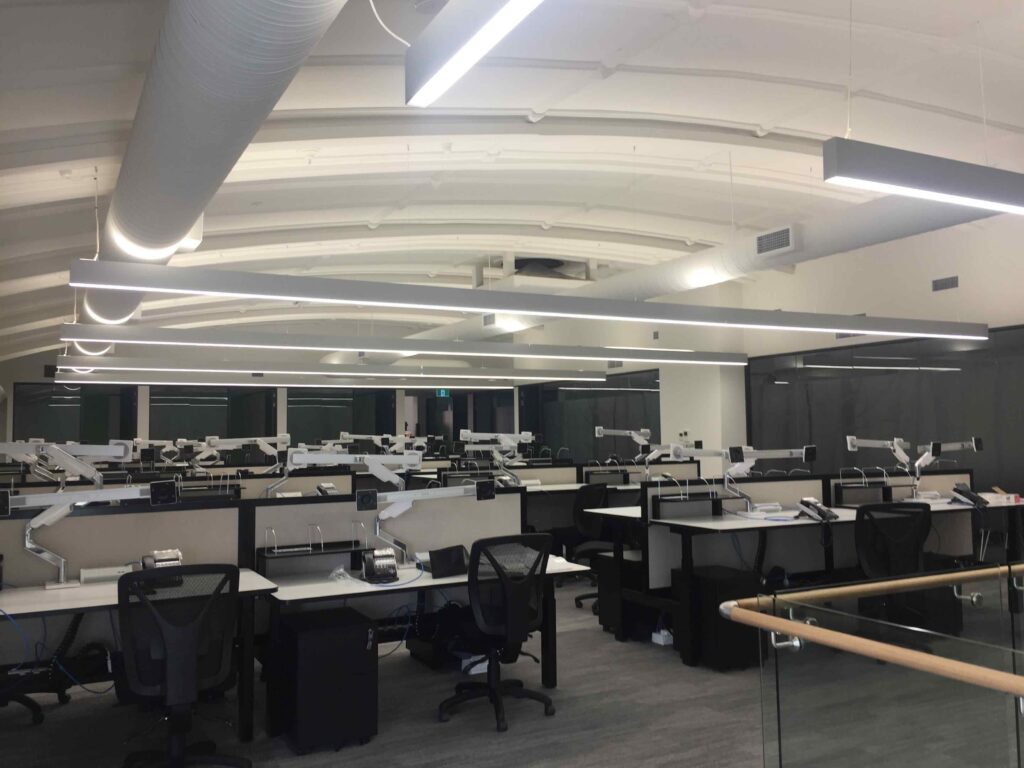
Architects faced an even tougher restriction with a client in regional Victoria. The heritage listed ceiling was extraordinarily delicate—described as being “like cheese”. Workers could not cut into the plaster. They could not hang any acoustic equipment from the structure either.
Our team avoided the ceiling entirely. We positioned specialised under-floor speakers on ledges around the edges of the main room. This layout utilized the room’s unique architecture. The natural curve of the historic ceiling distributed the masking sound evenly. It created a comfortable, even acoustic environment. This approach satisfied the client’s acoustic and heritage requirements perfectly. It reduced intrusive noise without a single drill hole.
Do you manage a historic space? You can achieve superb acoustic comfort without compromising classic architecture. Contact our team today to review your heritage project.