
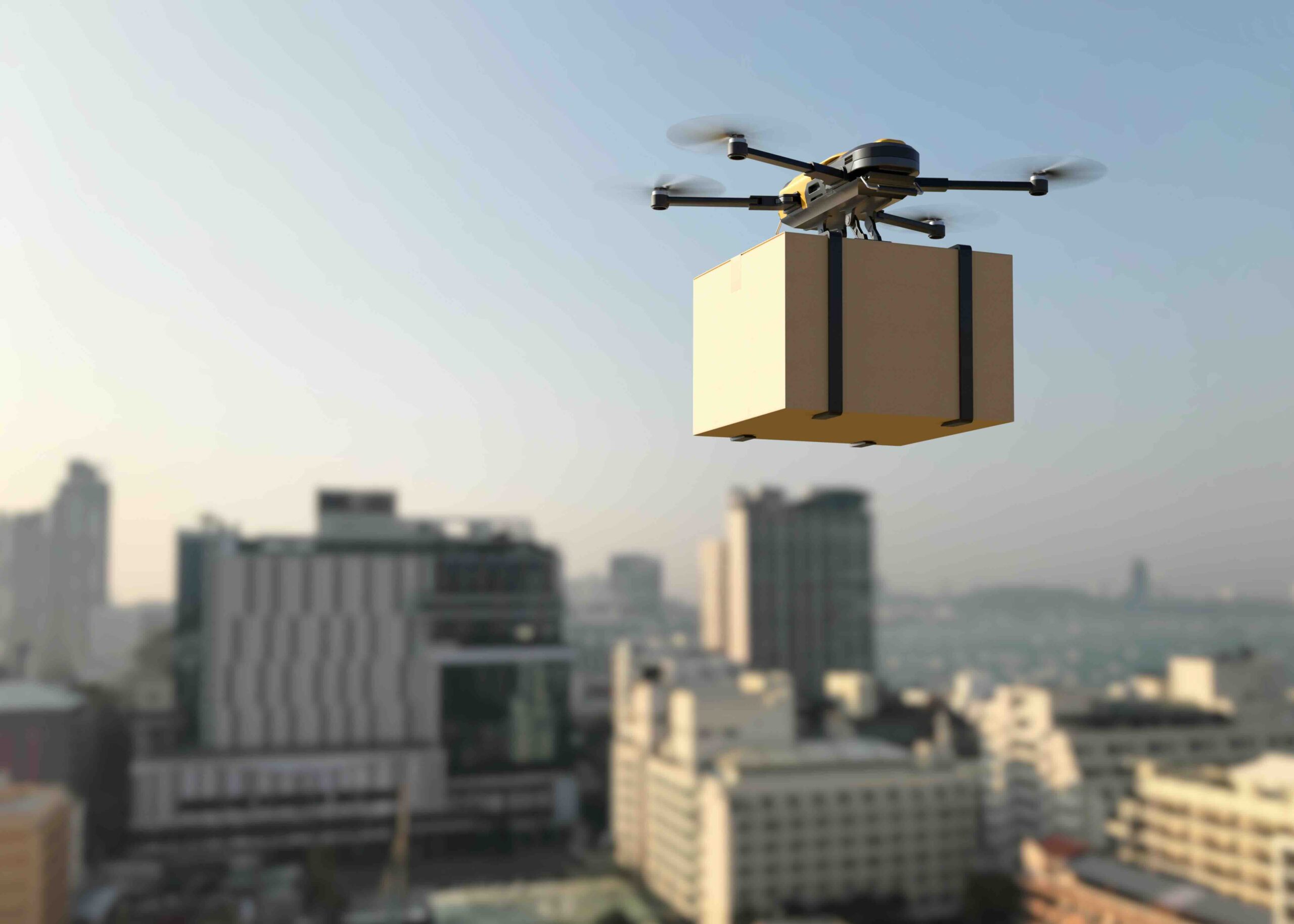
The rapid evolution of modern technology has brought incredible convenience to our lives. But it has also introduced a new environmental challenge: noise pollution. From the constant hum of urban traffic to the emerging buzz of delivery drones in our skies, managing the acoustic landscape is more critical than ever for our health and productivity.
The impact of noise pollution
Recent research highlights that noise is far more than a mere annoyance. It has become a significant public health issue. A comprehensive study on the environmental and health impacts of noise pollution emphasises its links to cardiovascular disease, sleep disturbance, and cognitive impairment. For many, the soundtrack of modern life in a city creates a state of chronic stress that the human body isn’t designed to handle.
With each passing year, the complexity of this soundscape is growing. We are no longer just dealing with ground-level sounds. Indeed, we are increasingly looking to the skies.
Drones and acoustic management
The drone industry in Australia is poised for massive growth. Forecasts suggest that by 2043, transport and logistics flights could reach 50 million annually. While drones offer efficient delivery solutions, their unique acoustic signature—a combination of high-frequency tonal whines and broadband noise—presents a specific challenge.
Unlike the predictable rumble of a distant airplane, drones often operate at lower altitudes and perform maneuvers like hovering and vertical take-offs that significantly increase their noise output. Australian regulations are evolving to address this, with the Department of Infrastructure, Transport, Regional Development, Communications and the Arts working on frameworks to measure and model these impacts. Current policy focuses on managing noise through clever routing, such as following existing high-noise corridors like highways to minimise the impact on quiet residential areas.
Why Conventional Solutions Aren’t Enough
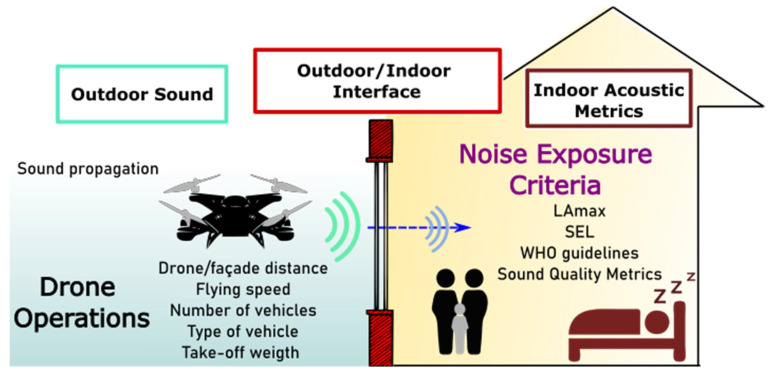
Traditional noise management often relies on sound measurements that are not suitable for drone noise. For example, in the diagram below, the noise metrics are unable to account for the acoustic characteristics of drone noise due to their substantial content in complex tones and high-frequency broadband noise.
Furthermore, research into psychoacoustics suggests that the annoyance factor of drone noise is higher than that of traditional aircraft, partly due to the fluctuating nature of the sound as the drone moves and adjusts its propellers.
Can sound masking help?
Just as road traffic noise becomes less intrusive and distracting with sound masking, it may help with other noises from aviation sources like drones.
Acoustic sound masking adds a subtle, unobtrusive background sound to a space to reduce the impact of intrusive noises. By raising the ambient background sound of a room with a specifically tuned spectrum of sound, we can effectively cover the distracting peaks of external noise. Setting the masking spectrum to reflect the higher frequency sounds of the drone may assist in mitigating the annoyance of these intermittent sounds.
As drones become a common feature of our urban environment, sound masking may offer a low cost solution to the associated health impacts of this new source of noise pollution.
If you would like to learn more about sound masking, please contact us.