
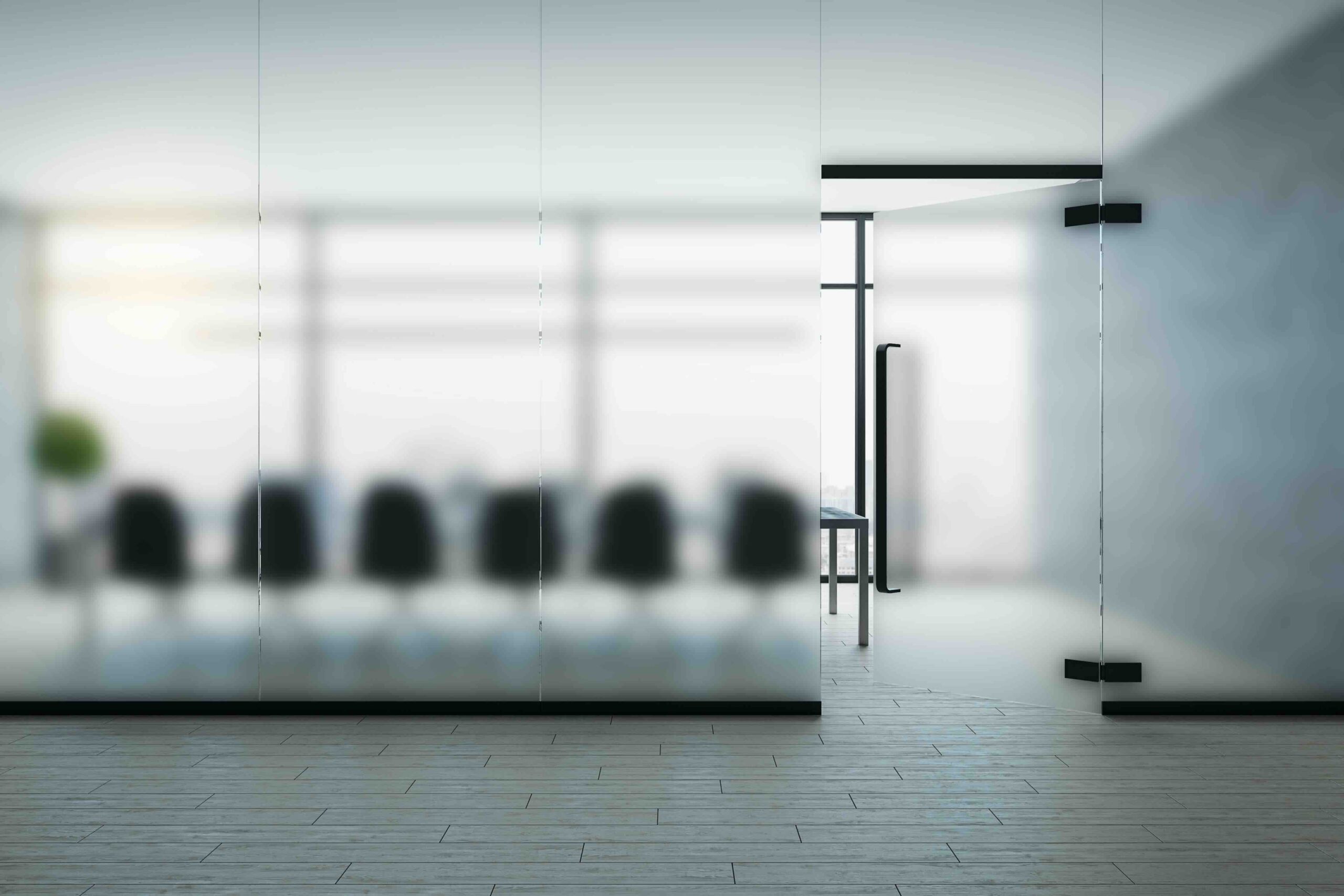
Modern office designer love glass walls and concrete. These materials create beautiful, bright, and collaborative workplaces. However, this aesthetic comes with a hidden cost. They create an acoustic nightmare for employees.
The problems of reverberation and speech privacy
The problem lies in basic physics. Sound travels in waves. When a wave hits a surface, the material either absorbs it or reflects it. Concrete and glass are incredibly dense and hard. They absorb almost zero sound. Instead, they reflect sound waves straight back into the room.
Imagine dropping a bouncy ball in a room made of rubber. It bounces everywhere. Sound does the exact same thing in a glass meeting room. This phenomenon creates a high reverberation time. Echoes amplify every syllable. This echoes destroy speech clarity inside the room. Simultaneously, the sound leaks straight through the glass panels. You lose both focus and data security.
Many managers try to fix this later with acoustic panels. Sadly, you cannot easily stick foam panels onto beautiful glass walls. It ruins the exact aesthetic you paid to build.
This is why retrofittable sound masking systems are often the only viable solution. Sound masking does not try to stop the sound. Instead, it adds a comfortable background sound to the environment. This sound makes conversations unintelligible, which is critical for speech privacy.
Securing an ASX listed boardroom
We recently solved this exact dilemma for a major ASX listed client. Their head office featured a large boardroom with sweeping glass walls. Privacy was so important that these glass walls were “switchable” — that is, at the touch of a button the clear glass becomes opaque. Unfortunately, while visual privacy was satisfied, it suffered from a severe speech privacy problem. Executives could not conduct confidential meetings. Anyone sitting outside in the open plan office, or walking down the adjacent hallway could clearly hear every sensitive word.
The client could not alter the expensive glass structure. They called Soundmask for a non-destructive remedy. We installed a customized, zoned masking system.
Our technicians carefully tuned the system to the space. The design achieved two goals at once. Executives inside the large boardroom could hear each other perfectly. This is because zone system maintained clear internal communication. However, the external zone rendered speech from within the boardroom unintelligible for those outside. We protected their confidential data without changing their beautiful architecture.
Do you want to fix your office speech privacy problems? Contact Soundmask today to learn about our advanced speech privacy solutions.